
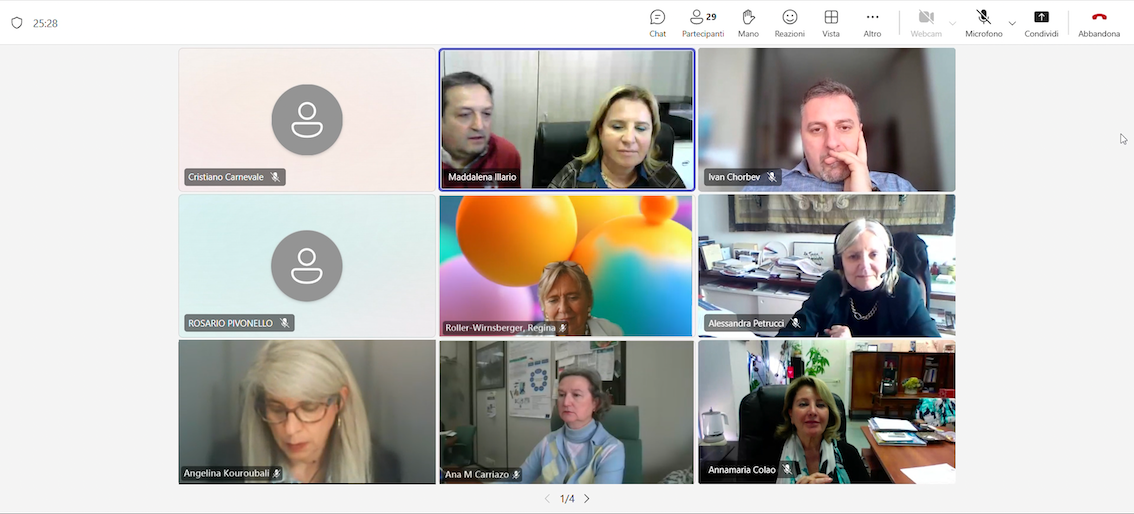
On the occasion of International Women’s Day, the Reference Site Collaborative Network (RSCN) and the Age-IT Community jointly organised a European webinar titled “Addressing sex and gender related health inequalities: insights from European experiences and good practices.”
The event brought together researchers, clinicians, policymakers and regional innovation ecosystems from across Europe to reflect on how sex and gender perspectives can be better integrated into health research, policy and digital health innovation.
The webinar was facilitated by Maddalena Illario (RSCN) and Guido Iaccarino (University of Naples Federico II).
The session opened with welcoming remarks from Alessandra Petrucci, Rector of the University of Florence, and Ana Maria Colao, UNESCO Chair for Health Promotion and Lifestyles. They highlighted the growing importance of gender medicine and the need to better understand biological and social determinants that influence health outcomes throughout the life course.
The first keynote presentation was delivered by Francesco Garifalos (University of Naples Federico II), who addressed the challenges of proactive health interventions in ageing populations. His presentation highlighted the well-known longevity paradox: although women tend to live longer than men, they often experience more years in poor health. He emphasised the importance of prevention strategies that focus not only on life expectancy but also on healthy life years and quality of life.
The second presentation, by Ivan Chorbev (Ss. Cyril and Methodius University), focused on the role of health data in addressing gender inequalities. He explored existing data gaps related to sex and gender variables in health research and discussed how incomplete datasets can influence clinical research, digital health tools and artificial intelligence models.
The webinar continued with a roundtable discussion moderated by Carina Dantas, bringing together representatives from several European Reference Sites: Angelina Kouroubali (Crete Reference Site), Ana Carriazo (Andalusia Reference Site) and Filiz Gul (Campania Reference Site).
The roundtable explored regional experiences and innovative practices aimed at addressing gender inequalities in health systems and digital health ecosystems. Speakers discussed the importance of collaborative innovation models, gender-sensitive health policies and the role of sociocultural determinants in shaping the adoption of digital health solutions.
Participants also highlighted the value of co-creation approaches, including living labs and participatory design processes, which enable citizens and patients to be actively involved in the development and testing of health technologies.
In her concluding remarks, Maddalena Illario summarised the key messages of the discussion, emphasising the need to strengthen gender-aware research, improve sex- and gender-disaggregated data collection and promote collaboration across research, policy and innovation ecosystems.
A full report of the webinar will be published soon.